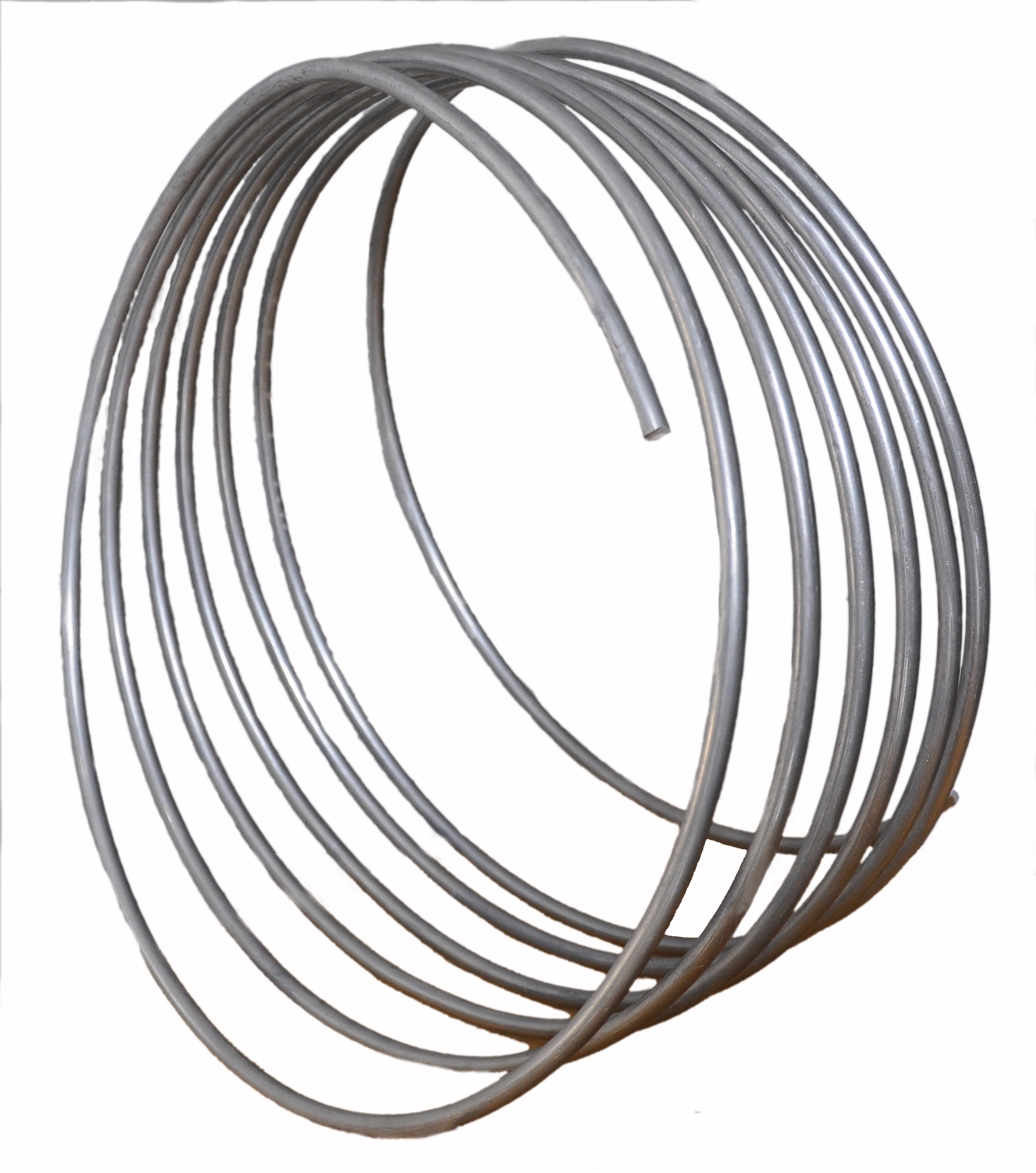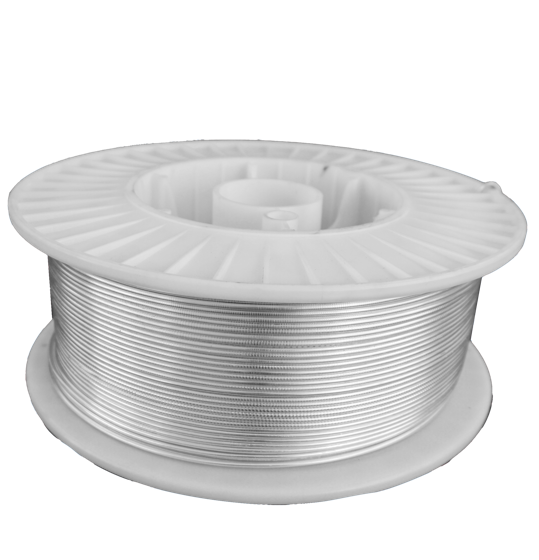
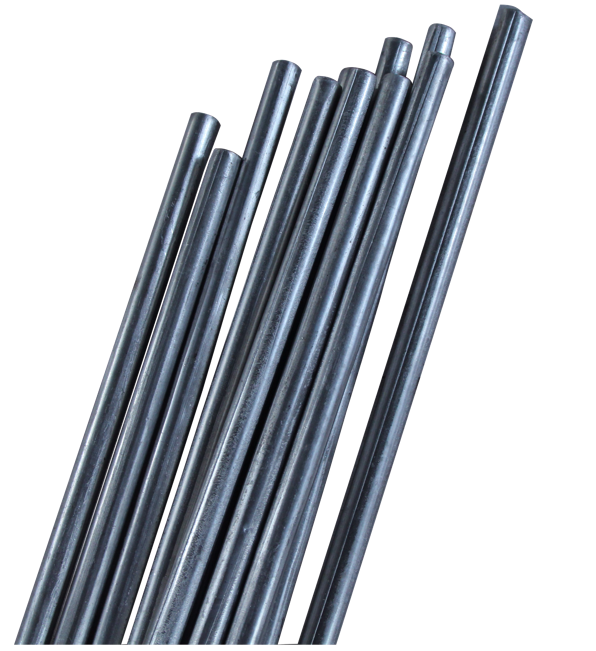
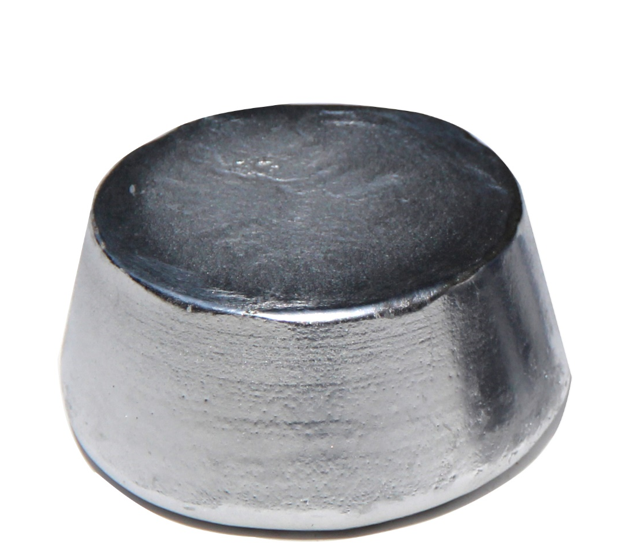
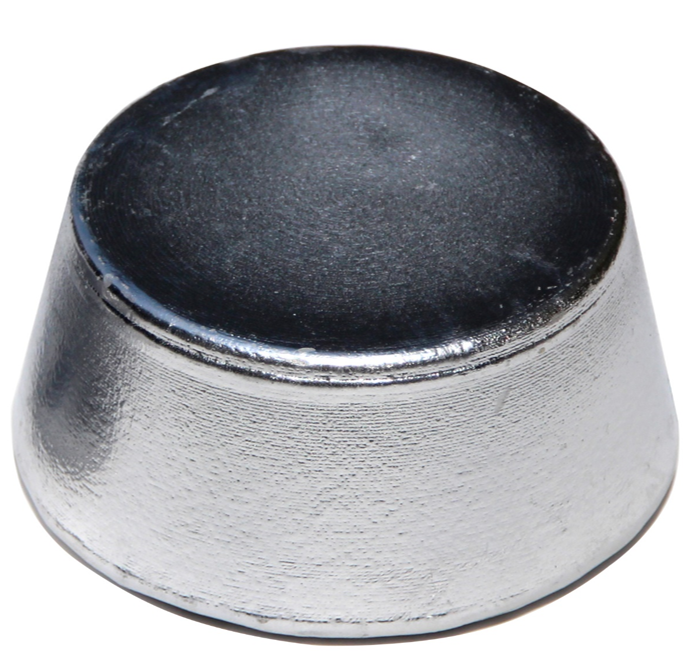
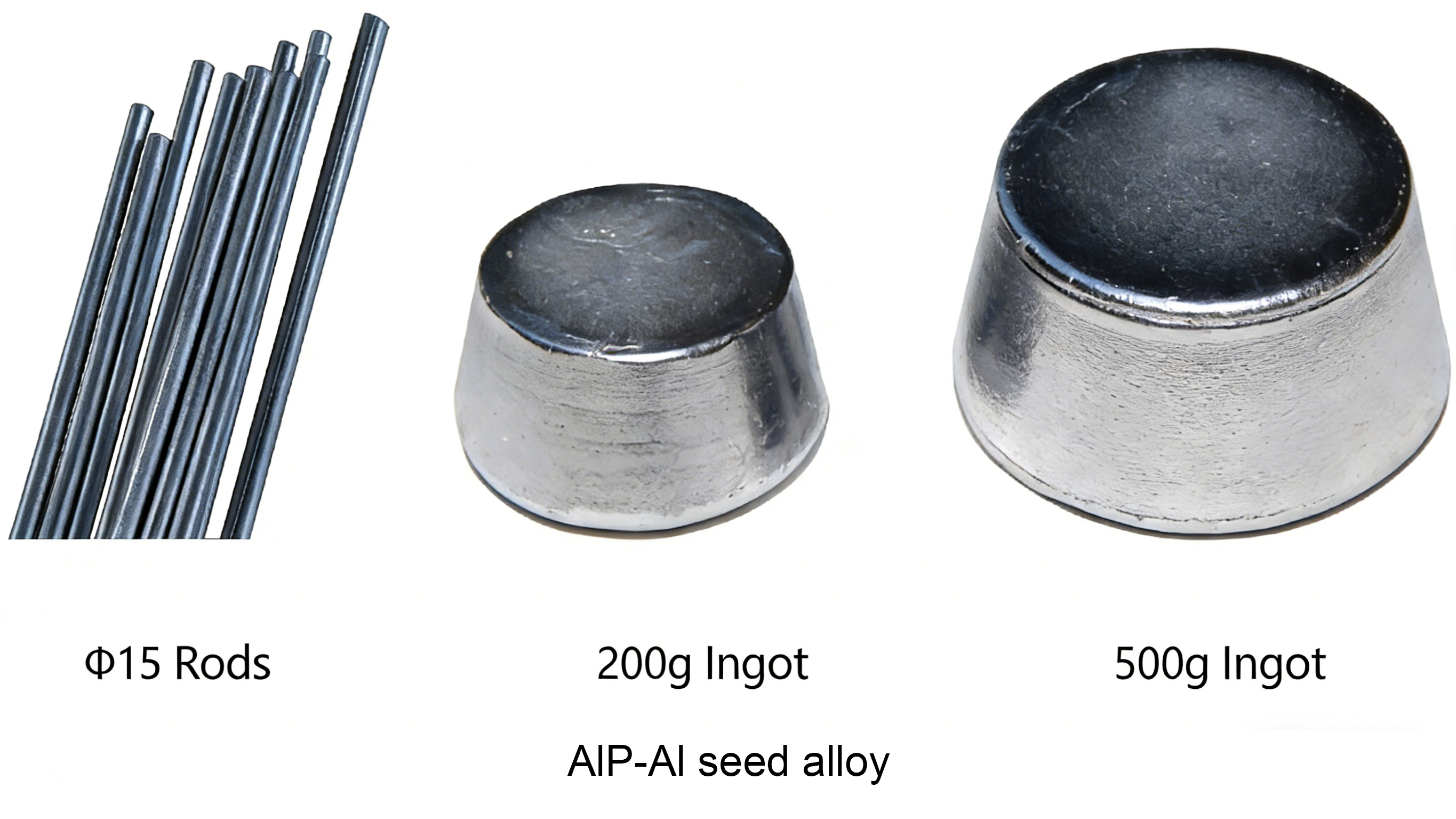
A series of AlP-Al seed alloy materials were invented and developed. The AlP seed can directly induce the nucleation of primary Si in aluminum alloys, refine the primary Si grains, and alter the morphology of the eutectic Si phase. It improves the wear resistance, volume stability and high-temperature fatigue resistance of high-Si aluminum alloys, solving the industry problems such as toxic gas emissions caused by the use of traditional modifiers (such as red phosphorus, phosphorus salt composite modifiers, and phosphorus-copper alloys), unstable modification effects, bubble formation on the machining surface of castings, and high aluminum alloy loss.
Table: The application scenarios and characteristics of AlP-Al seed alloy
Occasions applicable | Advantages | Product Standard |
1. Microstructure refinement of near-eutectic and hypereutectic Al-Si alloy ingots (bars) (such as ZL109, A390, etc.) . 2. Quality treatment and solidification structure control of key engine components such as aluminum alloy pistons, cylinder blocks, and cylinder heads. 3. The initial crystalline Si micro-nanocrystallization in high-silicon aluminum alloy gravity, low-pressure and die-casting parts. | 1. The modifying effect is refined, stable, long-lasting and hereditary; 2. It enhances the volume stability, wear resistance, thermal fatigue resistance and service reliability of the aluminum parts. 3. It helps to achieve precise control of phosphorus content. 4. The processes of refinement, modification and alloying occur simultaneously. The addition operation is simple, environmentally friendly, energy-saving and cost-reducing. | Φ15 rod 200g ingot 500g ingot |


Long Press to Scan QR Code
Scan QR Code